When You’re Stuck, Stall
In her uproarious memoir, Bossypants, Tina Fey describes one of the most pivotal decisions in her career (whether she’d portray an upstart Vice Presidential candidate from Alaska on Saturday Night Live) thus:
“We decided not to decide. This is another technique I learned from Lorne. Sometimes if you have a difficult decision to make, just stall until the answer presents itself.”
Sounds a lot like Frank Lloyd Wright, doesn’t it? As spy-turned-researcher Donald MacKinnon illuminated in his landmark study of practical creativity, often what distinguishes “the greats” from the rest is a willingness to not decide, yet. Answers have a tendency to “present themselves” to folks who delay decisions, especially to the ones who expect good ideas to keep coming.
The key, however, is to actually care about the solution. If you don’t care, you’re just procrastinating; delaying a decision when you care about the outcome, however, is totally different: it’s a productive strategy to court serendipity.
Related: Delay Decisions
Related: Expect Good Ideas to Come Late
Related: Drive Innovation Through Care
Click here to subscribe to Paint & Pipette, the weekly digest of these daily posts.

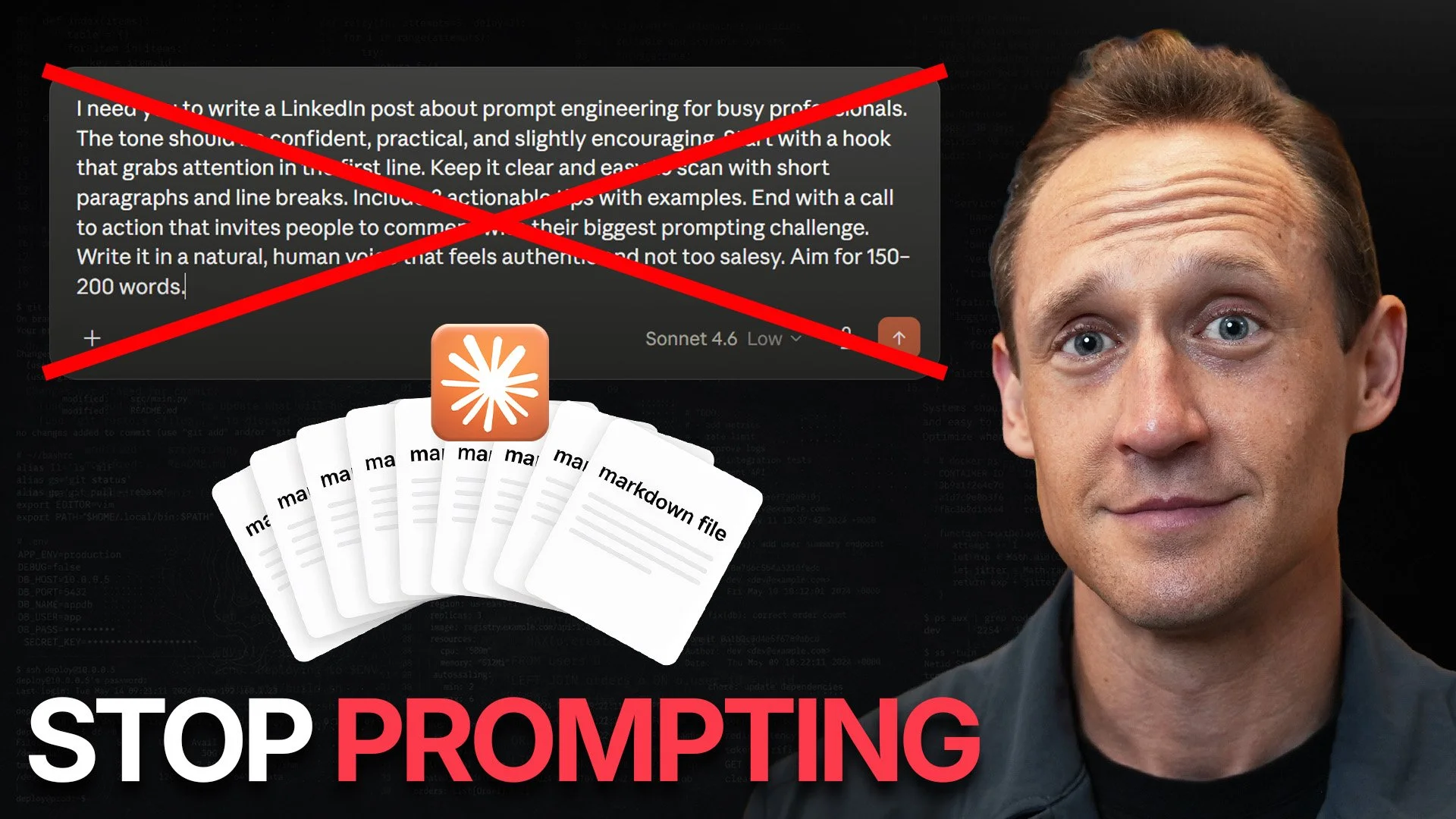
There are levels of AI augmentation: Some people use AI to draft emails. Josh used it to run 27 agents on a single problem, from his mobile on the road, with all the context of his laptop at home. Those are not the same thing.
Andrej Karpathy hasn't typed a line of code since December. That sentence has a blank in it — fill it with your word, and something shifts.
When Manu Ginobili raised his hand during a Spurs AI session and said "Could AI...?" — that was the ball game. The answer to almost every "could it" question is yes. The problem is most people don't have a question yet.
There are two fears circulating in the age of AI. One is fuel. The other is self-fulfilling. A neuroscientist recently explained why — and it changed how I think about every AI conversation I have.
This Week: Guest Post from Brice Challamel , Head of AI Strategy and Adoption at OpenAI — If AI can draft the memo, build the deck, and prototype the product, what exactly is the professional's contribution? Brice says it's not "less" — it's "different." Read his case for the shift from authorship to stewardship.
A 40% quality boost, available to anyone. Taken up by fewer than 3% of the workforce (and that number is going down, not up). At Wharton this week, I accidentally said the thing that explains why.
The engineer who experiments with 40 prompts shows up on the dashboard. The finance manager who quietly kills three recurring reports doesn't — even though she's the one who actually changed. A guest post from Logitech's Head of Global AI.
AI can make you 100x more productive at work, and make being present at home feel 100x more expensive. That tension isn’t just personal weakness. It’s a new economic reality.
I almost moved a family trip for two business opportunities. That moment made me ask a question I think every AI power user needs to sit with: What if your biggest AI risk isn’t bad output, but a misallocated life?
A real concern is not a valid conclusion. An EVP in finance emailed me last week about AI sycophancy. Most people raise that concern as an off-ramp. He made it the curriculum.