

Methods
of the Masters
A blog on the art & science of creative action.

You Will Never Have Two Free Days
I've spent twenty years telling people to make time for innovation. Last week, in front of a room I love teaching, I finally saw the flaw in the advice.

The Coaching Note
The chief AI officer of Logitech texted me a list of my AI tells. My first instinct was exactly wrong.

The Future's Losses Have Names. Its Possibilities Don't.
Stand on a Manhattan street corner in 1900 and try to predict Jamba Juice.
The Most Important KPI of the AI Era
The most important KPI of the AI era is one you've never heard of — because I made it up. It's called TTFS, nobody's dashboard tracks it, and yours is probably way too high.

The Most Expensive Instinct
The people most worried about AI are using it the most. The people using it least aren't worried — they've left the field. That quiet exit is the most expensive instinct in professional life.

The Most Expensive Sentence in Business
I heard it inside the Fort Knox of plutonium, from some of the smartest engineers alive: "AI is just not there yet." Here's what that sentence actually costs.

What Have You Never Measured?
The build took an hour. The insight took sixteen years. You probably have a number that would move your business and has never hit a dashboard — not because it's unmeasurable, but because no one ever named it."
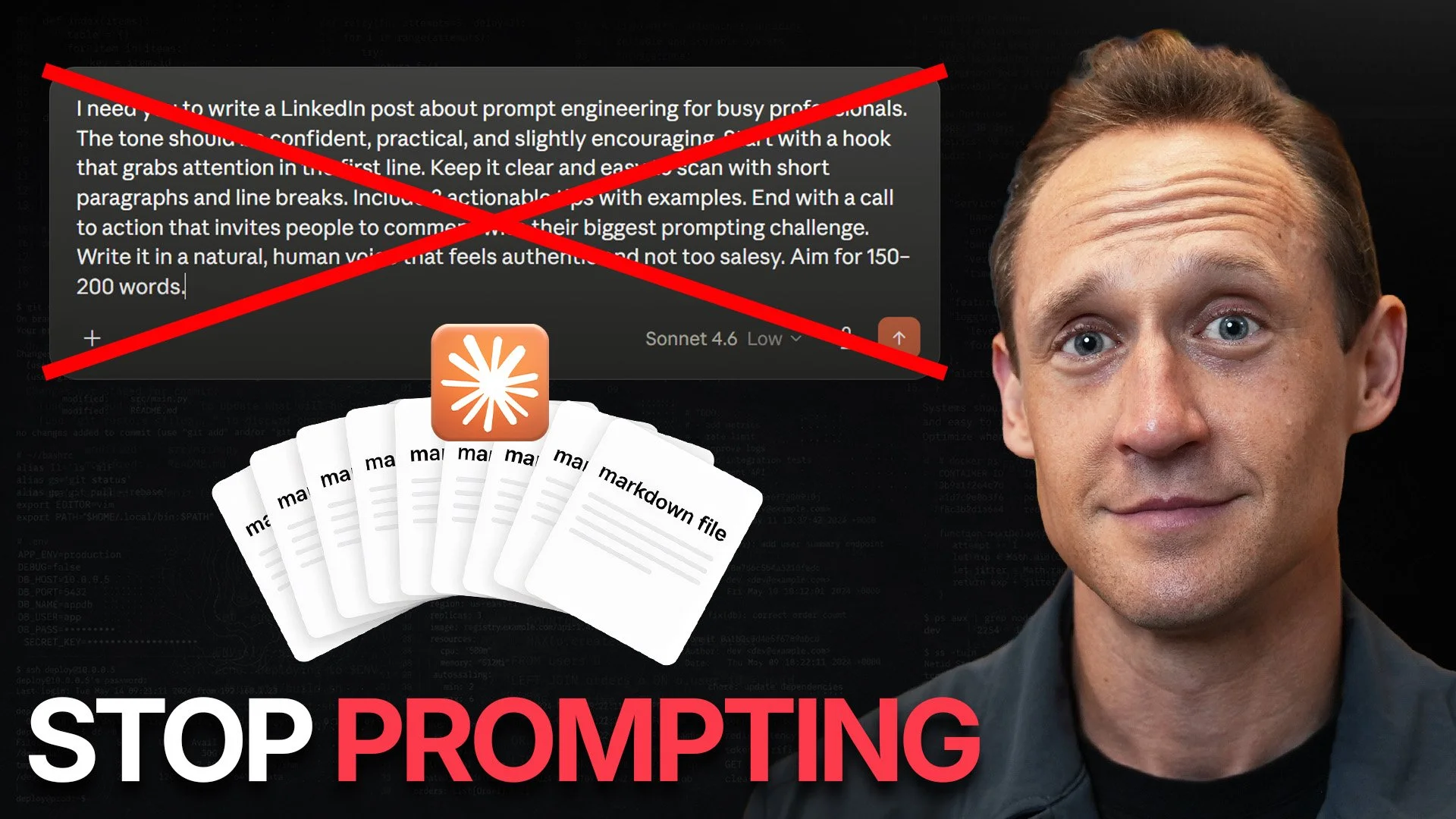
Build Your AI Chief of Staff in 30 Minutes
A reader wrote the same report twice — once with plain ChatGPT, once with his Teammate Stack. Same person, same AI model, same task. Only one of them sounded like him.

Why I Said No to Dave Grohl
He had a tattoo that said "Call me a baby because dolphins make me cry." He also said he'd pour hot oil on a kitchen robot to keep his job. I met him because I turned down Dave Grohl to hold a sign in Washington Square. Here's what I learned.


Don't Use AI. Work With It.
Reese Witherspoon asked her book club, "do you use AI?" Three million people watched. The internet split — and both sides were right, because they were arguing about the wrong word.

Real Concerns, Wrong Conclusion
A real concern is not a valid conclusion. An EVP in finance emailed me last week about AI sycophancy. Most people raise that concern as an off-ramp. He made it the curriculum.

This Is What Real Augmentation Looks Like
There are levels of AI augmentation: Some people use AI to draft emails. Josh used it to run 27 agents on a single problem, from his mobile on the road, with all the context of his laptop at home. Those are not the same thing.

The Rising Opportunity Cost of Being Human
AI can make you 100x more productive at work, and make being present at home feel 100x more expensive. That tension isn’t just personal weakness. It’s a new economic reality.

Are You More of What You Value?
I almost moved a family trip for two business opportunities. That moment made me ask a question I think every AI power user needs to sit with: What if your biggest AI risk isn’t bad output, but a misallocated life?

I Have a Team (A Collection of “Wherewithal Moments”)
I'd been stuck for weeks — not because the technology wasn't available, but because I hadn't thought to ask. I've started calling these 'wherewithal moments.' They're hard to manufacture. But they compound.

Do You Feel The Pain Of Idle Agents?
Most people treat AI like a better search engine. The few who've broken through treat it like a team that never sleeps. If you don't feel the pain of idle agents, you haven't grasped what's available to you.

Diversify Your Bets
Finance 101 says diversification — holding a broad range of investments from safe bonds to growth equities — is the best way to reduce your risk and maximize return. So why is your AI strategy all municipal bonds?

The Imagination Ceiling: Why 70% of Your People Are Stuck on AI
AI adoption is plateauing. I analyzed 5,000 anonymous survey responses looking for the culprit. I found it. And it's not what I expected.

Close the Loop
A senior executive called to tell me my talk was "one of three ingredients in the best idea I've ever had." That almost never happens. Here's why it should.